Your first bowling trip is simpler than it looks. The lanes are already oiled, the pins are already set, and nobody is keeping a scout's eye on your form. Still, a little knowledge goes a long way. Knowing which ball to grab, where to stand, and what all those marks on the screen mean turns a confusing hour into a genuinely good time.
What the Lane Is Telling You
A standard lane runs 60 feet from the foul line to the head pin and is about 41.5 inches wide, with a gutter on each side. Behind the foul line is the approach — roughly 15 feet of smooth wood or synthetic surface where you walk and slide. Step over the foul line and the shot doesn't count, even if you knock down every pin.
On the approach you'll see two sets of markings: dots close to the foul line and a row of seven arrows about 12 to 16 feet down the lane. Those arrows aren't decoration. They're aiming targets, and they're much easier to hit than a pin 60 feet away. Most new bowlers do better picking one arrow and rolling over it than staring at the pins.
At the far end sits the pin deck, where ten pins stand in a triangle with about 12 inches between them. The sweep and pinsetter clear fallen pins between shots. Between your lane and the next one is the ball return, which brings your ball back — give it a second to stop before reaching in. Above the lane, a screen tracks the score for your whole group, so you rarely have to do math by hand.
Choosing a House Ball
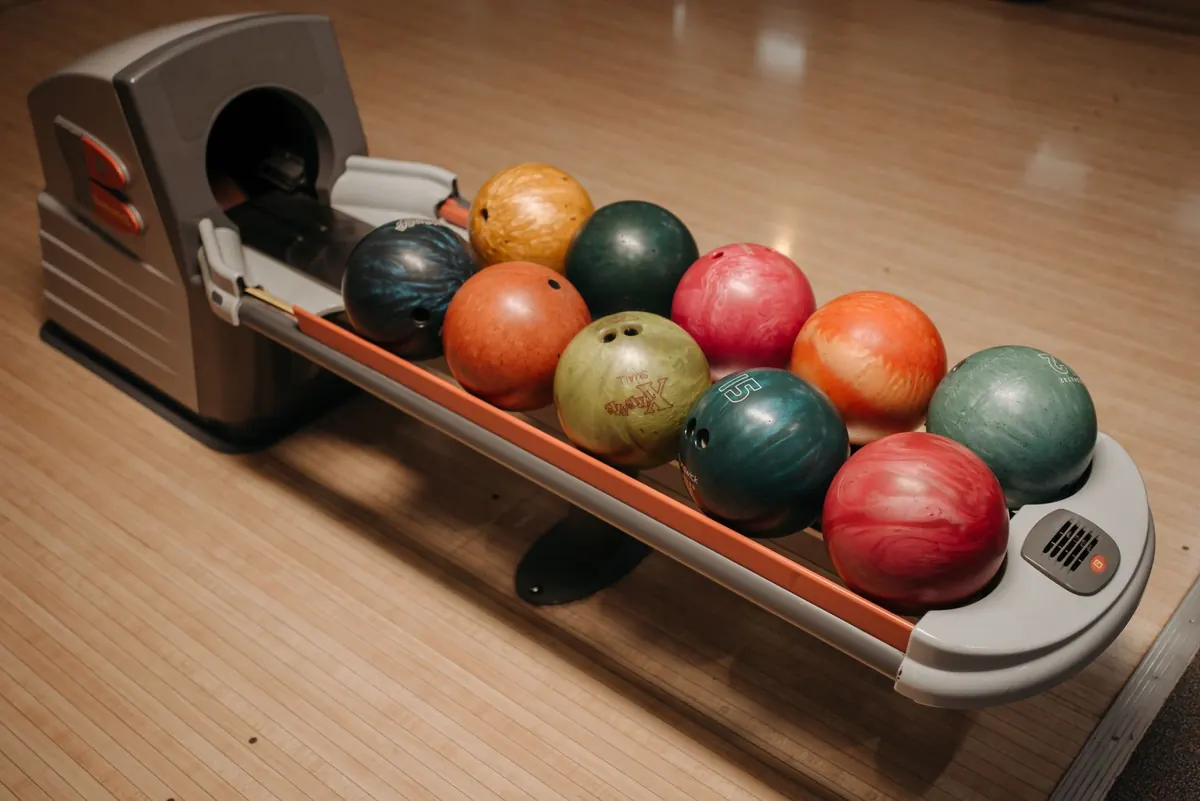
House balls are the free rental balls on the racks near the front desk, and they come in a range of weights and hole sizes. The two things that matter are weight and fit.
A rough starting point is a ball around 10 percent of your body weight, though most adults land somewhere between 10 and 14 pounds and plenty of strong adults throw 15 or 16. A ball that's too heavy forces you to muscle it, which usually means dropping it or spraying it into the gutter. A ball that's too light tends to bounce off the pins instead of driving through them.
For fit, slide your middle and ring fingers into their holes up to about the second knuckle, and your thumb in all the way. It should feel snug but not pinched. If you have to jam your fingers in, or if the ball slips off when you swing it gently at your side, try another size. Loose holes can be padded with a strip of bowling tape from the counter; tight ones can't be fixed, so just grab a different ball.
Your First Throw: Keep It Simple
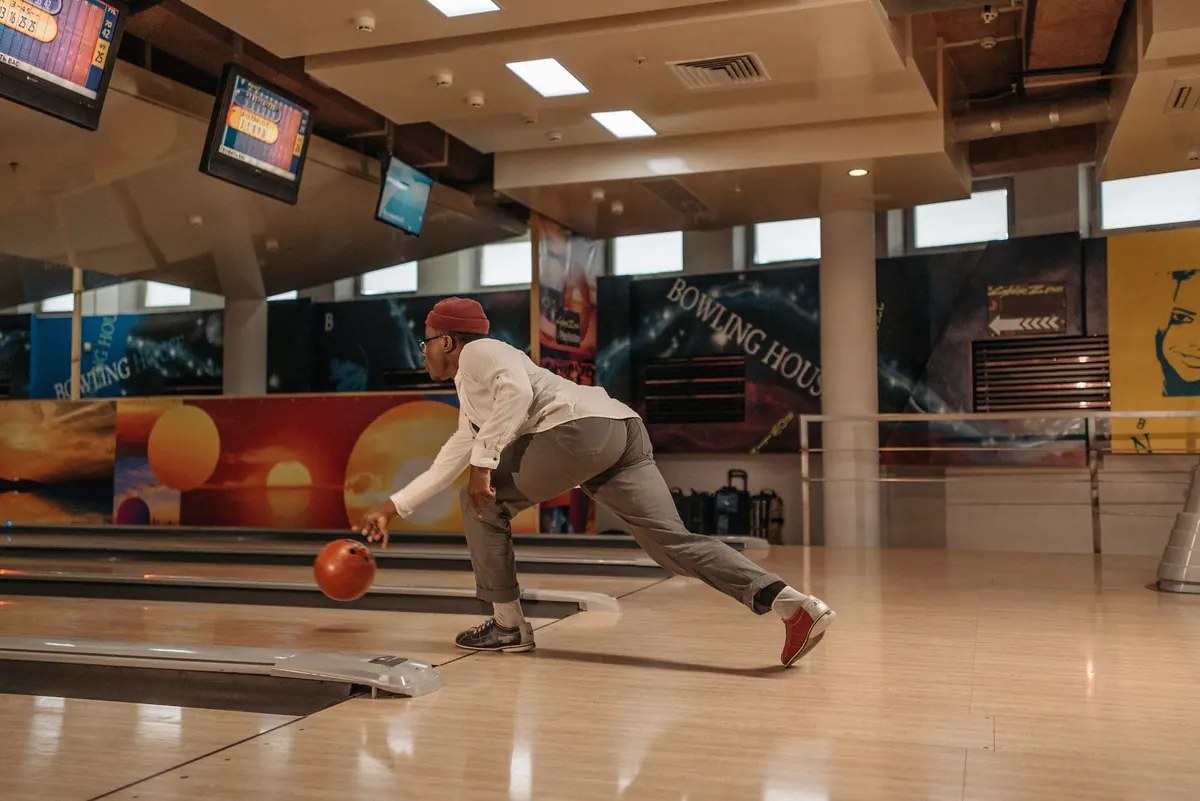
Forget the hook for now. A straight ball down the middle of the lane is a perfectly respectable first shot, and learning a smooth, repeatable motion matters far more than curve.
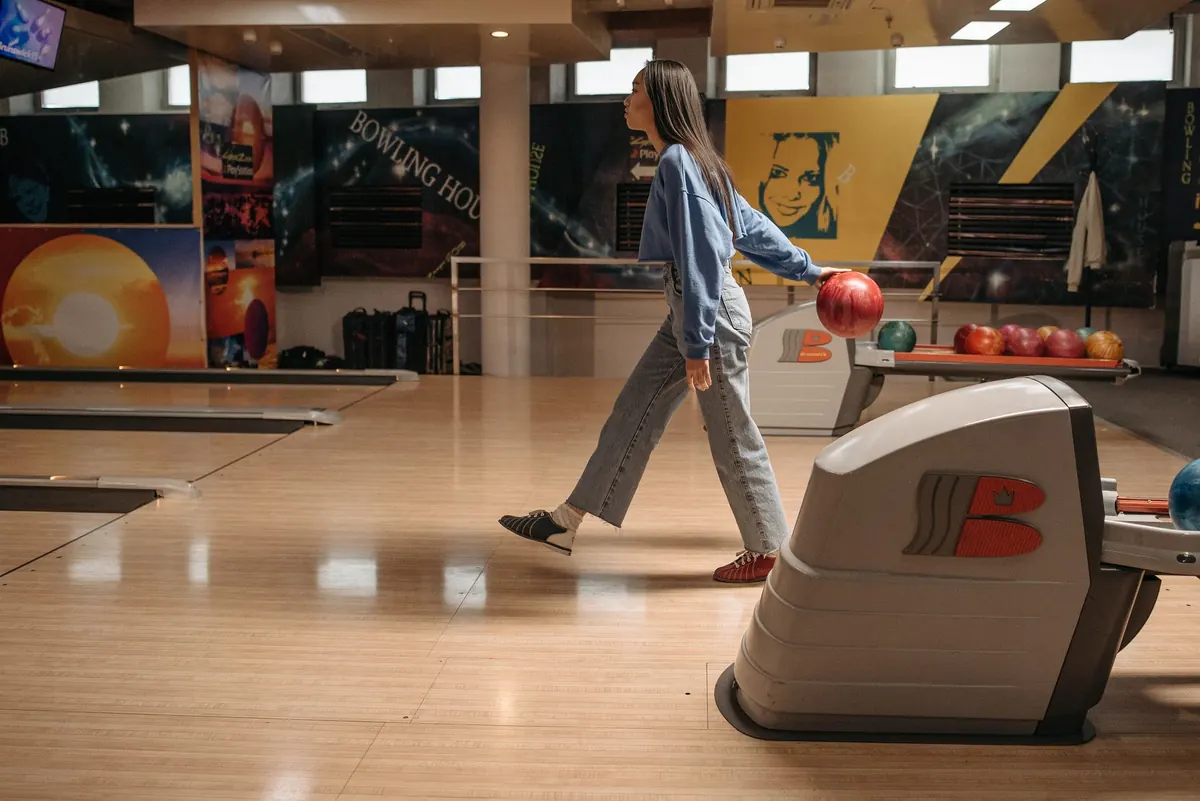
- Stand on the approach with your feet together, ball held at waist height in both hands.
- Take four steps toward the foul line. If you're right-handed, start with your right foot; if you're left-handed, start with your left.
- On the first step, push the ball forward and let it drop into a natural pendulum swing.
- On the last step, your sliding foot stops and your arm releases the ball just past your ankle.
- Let your arm finish high, pointing at your target. Stop moving and watch the ball hit.
Right-handed bowlers aiming to hit the pocket — the gap between the 1 and 3 pins — usually target the second arrow from the right. Left-handers aim at the second arrow from the left. Walk slowly. Rushing the approach is the most common cause of a bad shot.
Scoring Without Your Eyes Glazing Over
A game is ten frames, and in each of the first nine you get up to two balls to knock down all ten pins. The symbols on the screen tell the story: an X is a strike (all ten on the first ball), a / is a spare (all ten across two balls), and a – means no pins fell.
The scoring rewards streaks. A strike is worth ten plus whatever you knock down on your next two balls. A spare is worth ten plus your next single ball. An open frame is simply the number of pins you knocked down. In the tenth frame, a strike or spare earns you bonus balls so you can finish the scoring properly.
Here's the practical version: if you knock down eight pins and then one, that frame is nine. If you throw a strike and then seven and two, that frame is 19. The screen handles all of it, so you can focus on your next shot.
Etiquette: The Unwritten Rules
Bowling has a short list of courtesies that keep everyone safe and moving. Most first-timers learn them the hard way, so here they are up front:
- Change into bowling shoes. Street shoes track dirt and moisture onto the approach and make it dangerous for everyone.
- One bowler on the approach at a time. If two of you are ready, the bowler on the right goes first.
- Stay behind the bowler. Don't stand at the foul line or wander onto the approach while someone is throwing.
- Wait your turn at the return. Let the ball come to a stop, and don't reach across another bowler to grab yours.
- Don't use someone else's ball without asking. A fitted ball is personal equipment.
- Keep food and drinks away from the approach, and never set anything on the ball return.
- If pins jam or the machine stops, tell the front desk. Don't reach into the pinsetter.
One more: keep a steady pace. Bowling is more fun when a game takes about an hour rather than three, so be ready when your name comes up.
What to Bring and What It Costs
Wear comfortable clothes you can move in and socks for the rental shoes. Most alleys charge by the game or by the hour, and rates often shift between daytime, evening, and weekend hours — a quick call or a look at the alley's website will tell you what to expect. Some centers also offer a flat rate for a set block of time, which can be a better deal for a group of four or more. Ask about bumpers if you're bowling with young kids; they're rails that pop up to keep the ball out of the gutters, and most alleys will turn them on or off per bowler.
A note on comfort: bowling involves lifting and twisting. If you have a history of back, shoulder, knee, or wrist problems, it's worth checking with a doctor or physical therapist before you play, and starting with a lighter ball.
Make the First Game About Fun
Your score on the first visit tells you almost nothing about how good you'll get. What matters is getting the rhythm: pick a ball that fits, aim at an arrow, walk slow, and stay out of the way when someone else is up. If you knock down a few pins and laugh at the rest, you've done it right. Next time, try a heavier ball, or ask someone at the counter to show you how to line up for a spare. The rest comes with a few more games.
Photo: Pavel Danilyuk / Pexels