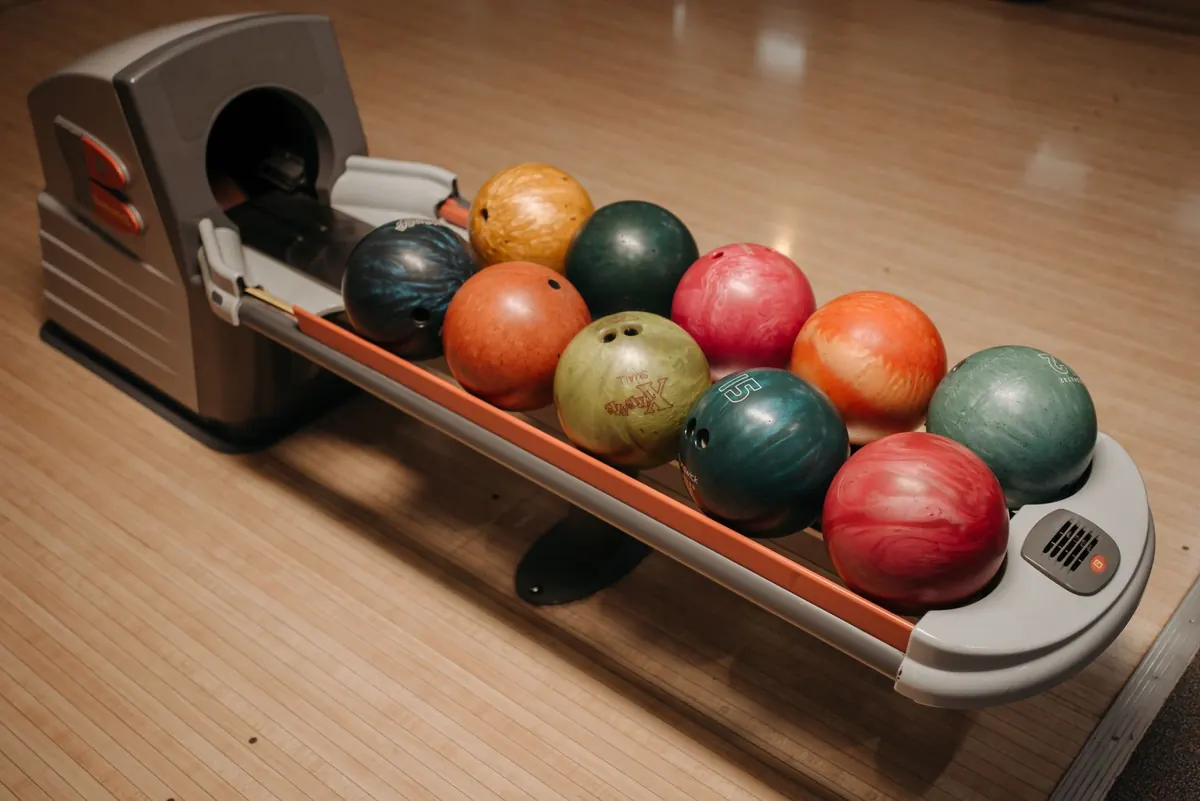
Thursday night league is its own small society, and it runs on rules nobody hands you at sign-in. You learn them by watching: the half-step pause before someone steps onto the approach, the way the ball return clears out the moment a bowler picks up their spare ball, the two seconds of quiet that settle over a pair of lanes while a split gets lined up.
None of it is printed in the rulebook. All of it matters. League bowling puts eight to ten people on adjacent strips of wood, all trying to do the same precise thing at slightly different speeds. Etiquette is what keeps those overlapping rhythms from turning into a traffic jam.
Why Courtesy Carries More Weight on League Night
Open bowling is forgiving. Nobody cares if you wander onto the approach with a slice of pizza or roll four frames in a row. League is different: same lanes, same people, same night, week after week. The bowler in the next pair is also your opponent and, a few weeks from now, the person who drives you to the airport.
Timing collisions have a real cost, too. Bowling is a rhythm sport. You step, you slide, you release — the whole sequence leans on a consistent tempo. When someone steps onto the approach in your peripheral vision, that tempo breaks. You rush the release or pull the shot, then spend three frames trying to find the feel again.
So the unwritten rules aren't about being polite for its own sake. They protect everyone's tempo, including yours.
Lane Courtesy: The Rules That Live Between the Gutters
The one-lane rule
If you and the bowler on the lane immediately to your right are both up, they go first. Not because they outrank you, but because it's a tiebreaker everyone can remember and apply without discussion. Hold your position until they've released the ball and turned back toward the return. Then step up and take your shot.
Two-lane courtesy and house habits
Some leagues — usually higher-average or scratch leagues — expect two-lane courtesy: wait until the bowlers on the two lanes to either side of you have finished before you start your approach. Other houses stick strictly to one lane and consider two-lane waiting overly cautious. Ask your captain during week one which convention your center uses. It takes thirty seconds and saves a season of silent glaring.
The 12 Unwritten Rules, as a Checklist
- Give the bowler on your right the first shot. When two adjacent lanes are up at the same time, the right lane goes first. Then you.
- Wait for the release, not just the approach. Hold your spot until your neighbor has released the ball and stepped back. Stepping up early is the most common etiquette slip in the sport.
- Learn your house's two-lane habit and follow it consistently, even when the lanes are moving fast and you're tempted to shortcut it.
- Stay off the approach when it isn't your turn. Chat, sip your drink, check the score — just do it on the carpet behind the lanes, never on the wood.
- Keep the ball return clear. Retrieve your ball and step away. Don't stand at the rack weighing two options while three people wait behind you.
- Never cross another lane's approach. Walk behind the ball returns to get to the other side of the house. Cutting across the front disrupts bowlers several lanes away.
- Silence the phone. A buzz in your pocket is fine. A ringtone during someone's spare attempt is not. Step into the concourse to take the call.
- Keep food and drink off the approach. A spilled soda on the wood is a safety problem, not just a mess, and the staff has to stop play to deal with it.
- Be ready when your turn lands. Ball in hand, laces tied, head in the frame. League nights run long when four bowlers each need an extra thirty seconds.
- Skip the unsolicited coaching. If a teammate asks what you saw, tell them. Otherwise, keep the swing thoughts to yourself, especially mid-game.
- Save the big reactions. Celebrate your own strike loudly. But stay quiet and still while the bowler beside you is over the line, then react.
- Handle league business like an adult. Pay your dues on time, line up a substitute when you'll be gone, and tell your captain before the night starts rather than after.
Between Frames: Scorekeeping, Snacks, and Small Talk
The space between frames is where a league night either feels easy or feels tense. Keep your conversation at a volume that doesn't carry onto the approach. If you're keeping score on paper, do it promptly so the next bowler isn't waiting on a number. If your center has automatic scoring, resist the urge to crowd the monitor and argue about a pin count from four lanes away.
Team food and drink belong on the table behind the settee area, not balanced on the ball return. And if you're the type who brings a bag of chips, bring enough to share. It sounds trivial; it's part of why people come back to the same league for fifteen years.
When Someone Breaks an Unwritten Rule
New bowlers break these rules constantly, and most of them have no idea. Assume good intent first. A quiet word between frames works far better than a comment loud enough for both teams to hear.
No big deal — I just need a beat on the approach before you step up.
That's usually the whole conversation. If the same person keeps doing it, mention it to your captain, who can raise it with theirs away from the lanes. What doesn't work: lecturing from the settee, sighing theatrically, or rolling your eyes at your teammates. Those moves turn a two-second timing issue into a season-long grudge.
And when you're the one who slips — because you will — apologize once, adjust, and move on. Nobody remembers a single early approach. They remember the bowler who argued about it for three frames.
Your Pre-League-Night Routine
Most etiquette problems disappear when you arrive with time to spare. Fifteen minutes early is enough to change shoes, find your ball, check the lineup, and settle in before the first frame is called.
- Wipe your ball and check your grip before league starts, not during frame one.
- Confirm the lane assignment and who you're bowling against.
- Put your phone on silent before you sit down.
- Scan the pair next to you and note who bowls on your right.
- Say hello to the other team. It costs nothing and sets the tone for three games.
Do those five things and you'll spend the night bowling instead of apologizing. The best league bowlers aren't the ones with the highest averages. They're the ones nobody has to think about — because their timing, their space, and their manners are already handled.
Photo: Pavel Danilyuk / Pexels